
A CS2 Mouse Setup Built Around Control
Choose a CS2 mouse by balancing shape, sensor consistency, click feel, polling rate, wireless reliability, and the control needed for precise rifle aim.
open --guide-mice READY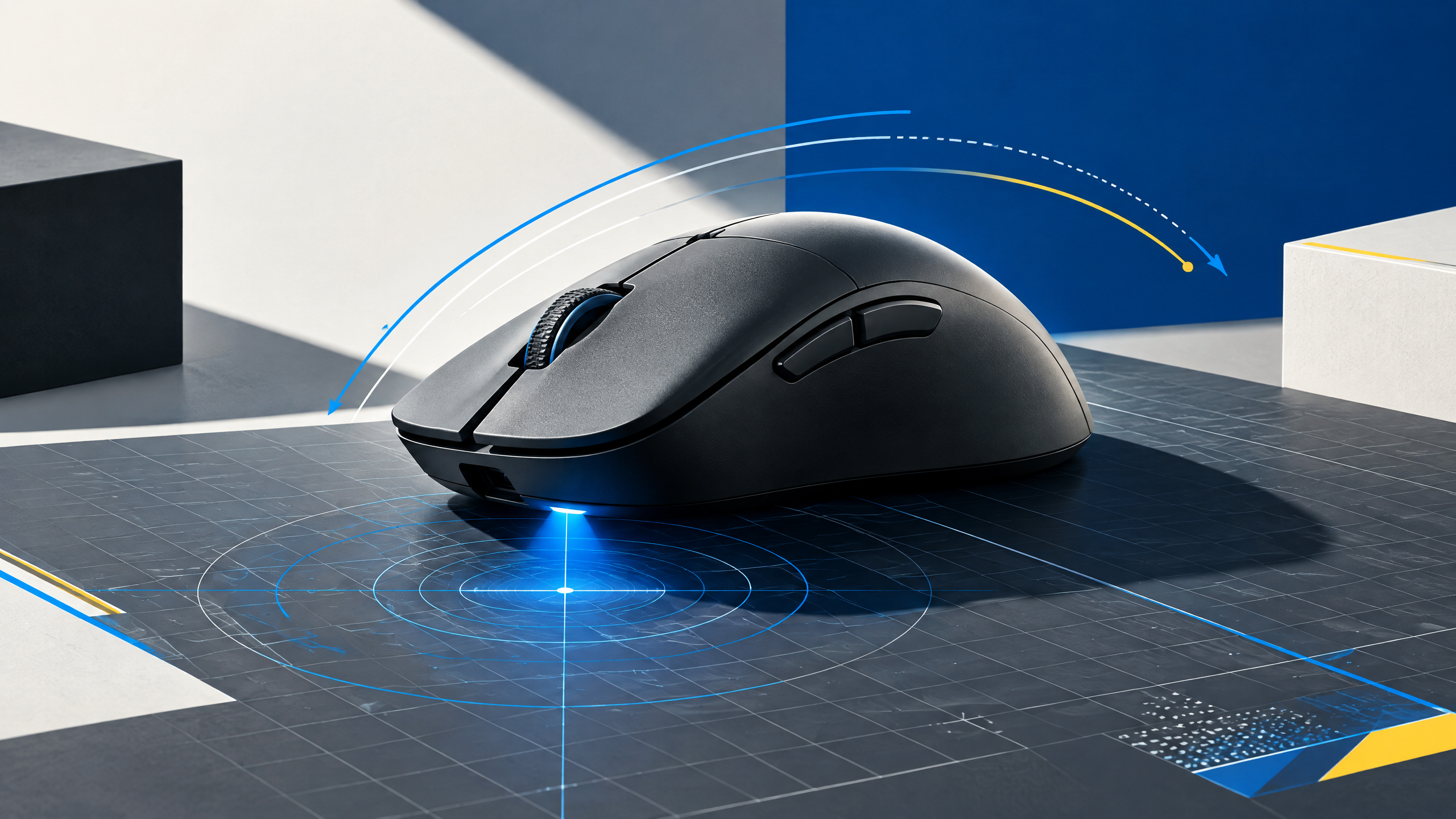
CS2 makes small aiming errors expensive, which is why a mouse must feel predictable when you hold an angle, clear a site, or reset after a spray. Pro usage offers useful context, not a prescription. This adaptation puts shape and hand fit first, then considers sensor behavior, click consistency, weight, polling rate, and wireless execution for a competition-ready shortlist under pressure.
A mouse is the physical link between intention and movement. Shape, grip, weight, sensor behavior, clicks, and wireless execution should be evaluated together; headline specifications alone cannot tell you whether a shell fits your hand.
Put hand fit ahead of brand momentum
A mouse that hugs your hand correctly makes holding angles and tiny corrections predictable; avoid jumping to popular models without testing hand fit. Shell geometry should permit a relaxed grip for extended anchor play and quick, repeatable resets for peeks. Comfort matters as much as reputation—select the shape that lets you micro-adjust without tension or finger overreach when clutching tight angles.
Tune weight and shape for rifle control
Rifle control favors a balance of weight and profile that supports steady tracking through calm crosshair placement and recoil recovery. Slightly heavier mice can dampen tremor during flick resets, while lighter models aid swift repositioning between holds. Tune the weight and curvature so your wrist and forearm movements translate cleanly to consistent horizontal and vertical corrections under sustained fire.
Assess click feel, feet, and sensor consistency
Click feel and sensor consistency directly influence confidence when dueling. Crisp, well-defined clicks reduce misfires during fast bursts, and smooth mouse feet help maintain predictable glide across surfaces. Inspect sensor behavior at low speeds for angle holding and at moderate speeds for tracking; any jitter, acceleration, or skipped counts can cost rounds when precision matters.
Decide whether higher polling is worth the cost
Higher polling rates can reduce input granularity but only provide real benefit if your system and playstyle exploit the extra responsiveness. Verify that elevated polling doesn’t introduce CPU overhead or inconsistent performance on your setup. Prioritize a stable, consistent link and predictable sensor over chasing the highest number when that number comes at the cost of reliability.
Field check
Before you keep this choice, run the following short check in your own setup:
- Measure hand position and grip before comparing brands.
- Test the shell with your real sensitivity and mousepad.
- Ignore features that add complexity without improving control.
Validate before you settle
Confirm your final selection by reproducing the in-round situations you face most: hugging angles, short sprays, and quick resets. Test click feel, weight balance, and sensor predictability in real matches and scrims. If something interferes with repeatable inputs, continue sampling alternatives until you find the mouse that supports steady control under pressure.
Source and next route
This PlayerCFG field note is original editorial copy built from public settings and gear research. It does not reproduce the source article. For the underlying reference, visit Best Mouse for CS2 .
DATA NOTEThe page contains current 2026 pro counts, but product rankings and model availability are fast-moving. Image is a ProSettings-hosted remote asset; clear licensing/attribution before reuse. PlayerCFG is not affiliated with the referenced publisher, game studio or hardware brand.
OPEN CS2 INDEX